
from the Soul Shine Blog
August 5, 2026
A different way of thinking about creativity, mindfulness and wellbeing.
For generations, we’ve understood the importance of looking after our physical health. We move our bodies, eat nourishing food and try to get enough sleep because we know these everyday practices help us stay well.
What if we approached our mental and emotional wellbeing in the same way?
Much of our conversation around mental health quite rightly focuses on treatment and support when people are struggling. Counselling, psychology, psychiatry and other evidence-based approaches play an essential role in helping people navigate difficult times.
But perhaps there’s another equally important question worth asking.
What helps people stay well?
What everyday practices help us become more present, more resilient, more connected and better equipped to navigate the inevitable challenges of life?
Research is increasingly exploring what many artists, educators and practitioners have intuitively understood for generations: creativity has the ability to influence how we feel, connect and experience the world around us, and this is something we’ve had the privilege of witnessing firsthand.
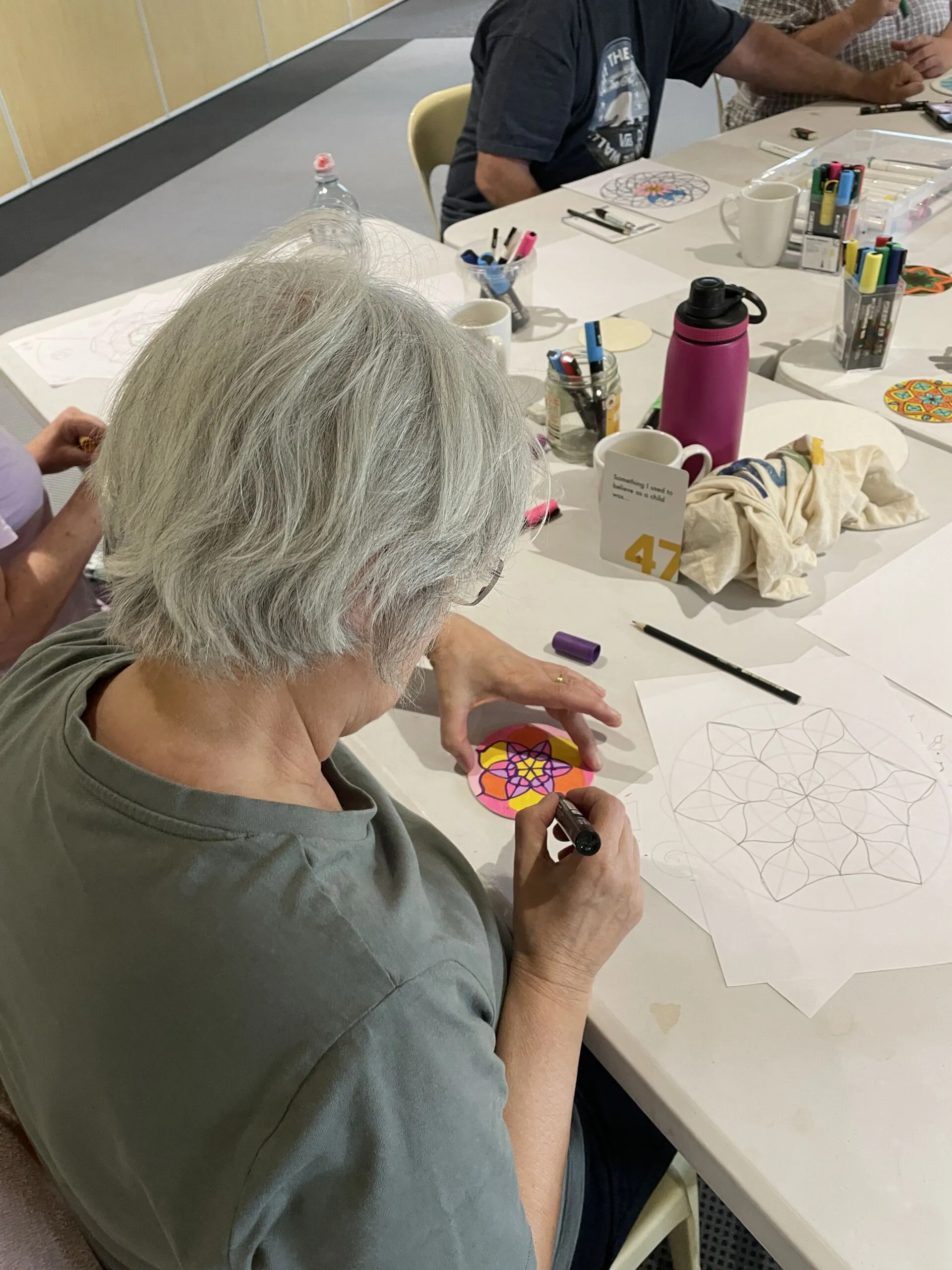
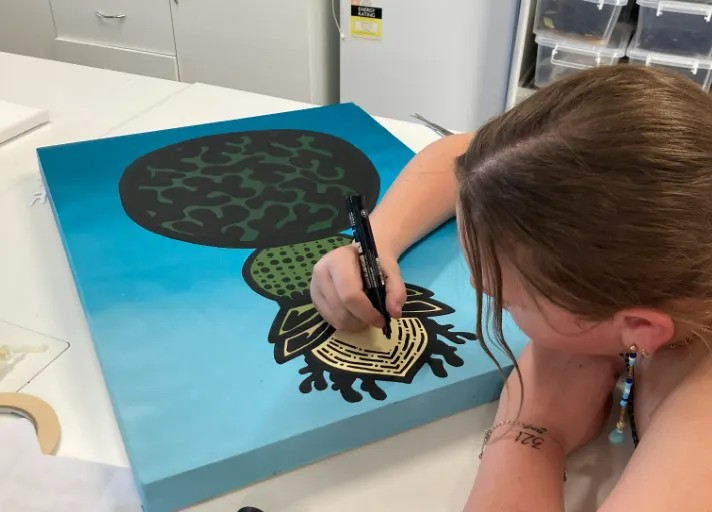
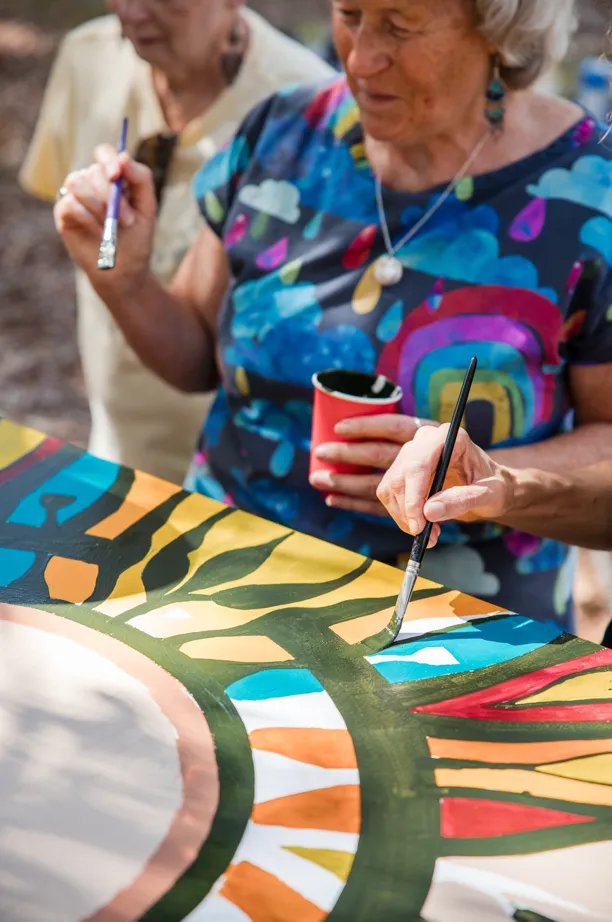
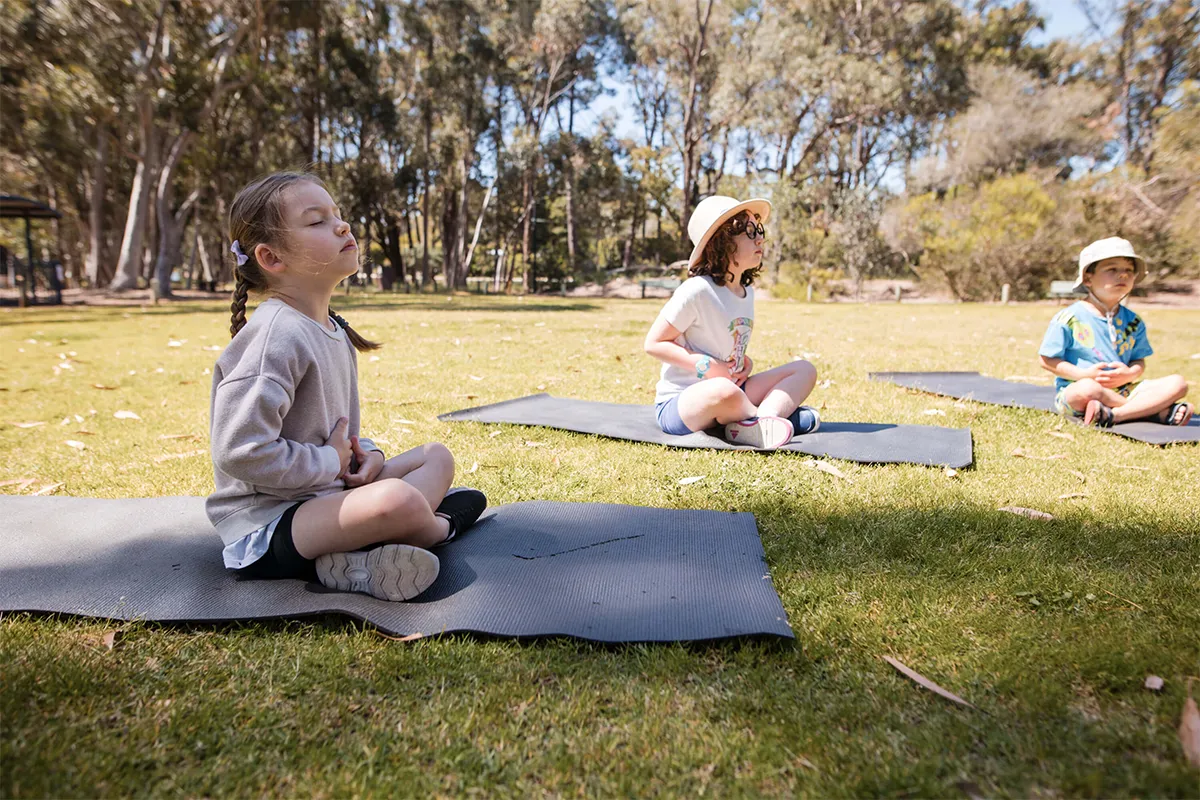
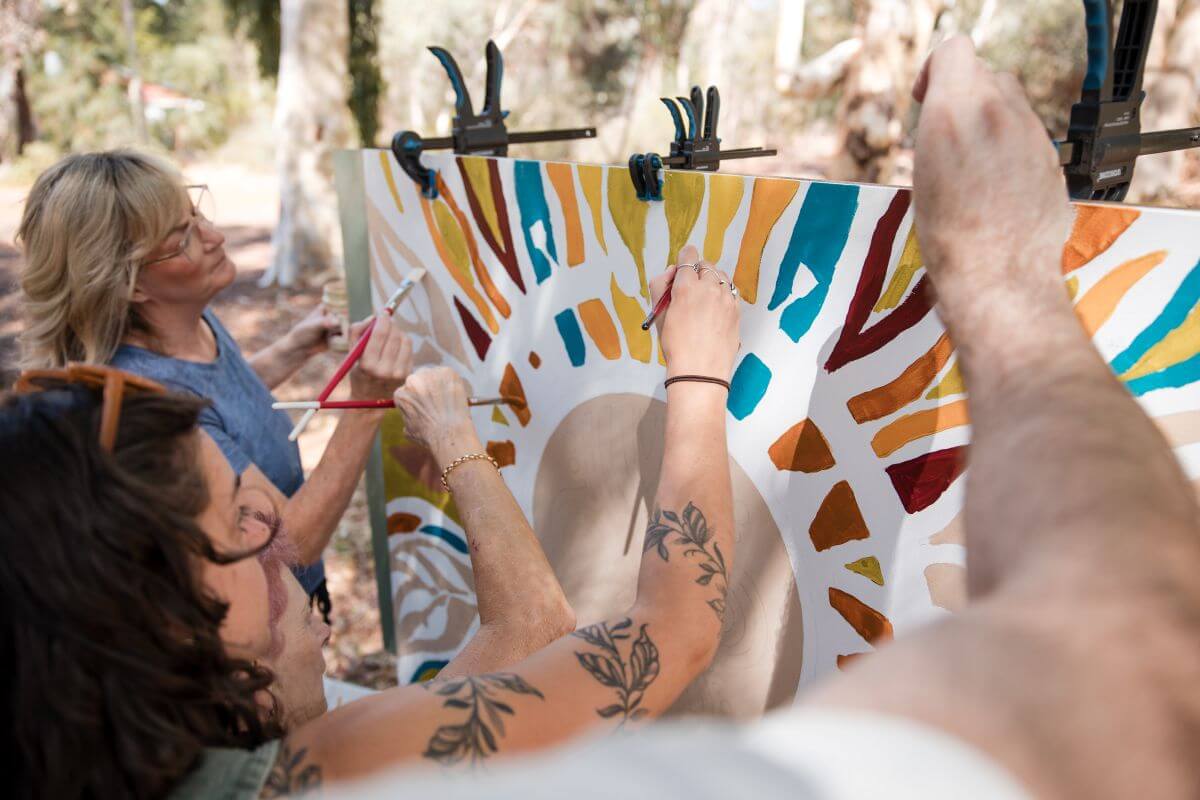
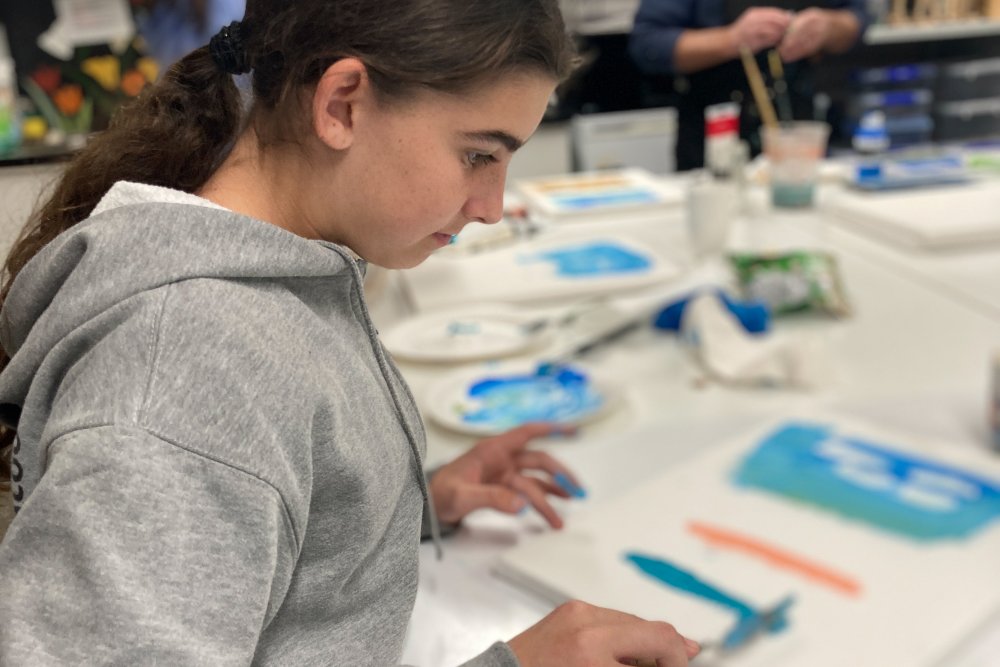
In workshops with young people, educators, community groups, hospital patients and workplace teams, we’ve noticed something remarkably consistent. When people are invited to slow down, create without judgement and pay attention to the process rather than the outcome, they begin practicing something much deeper than creativity.
They practice presence.
More than making Art
When many people hear the word creativity, they often think about artistic ability.
They imagine painters, musicians, designers or people who have a natural talent for creating something beautiful, and for many people, this is where the story ends. “I’m not creative.”
But creativity has never been limited to those who can draw, paint or make something impressive. Creativity is much more fundamental than that.
It’s our ability to explore, imagine, experiment, problem-solve and express ourselves. It is the part of us that wonders what if? and allows us to approach experiences with curiosity rather than certainty.
Practising the Qualities That Help Us Thrive
Creating asks us to make choices. Sometimes we know exactly what we want to create. Sometimes we don’t. Sometimes an idea flows easily. Sometimes we need to sit with uncertainty and allow something to emerge.
In those moments, creativity invites us to practice trusting ourselves. It teaches us that we don’t always need to know the final outcome before we begin.
Creating also asks us to respond when things don’t go according to plan. A line doesn’t look the way we imagined. A colour doesn’t feel right. A creative idea changes direction.
These moments give us an opportunity to notice our reactions and practice meeting them with curiosity rather than judgement.
Can we begin again? Can we adapt? Can we accept what is happening and work with what is in front of us?
Over time, these small creative moments become opportunities to strengthen qualities that support wellbeing in everyday life. Patience. Self-compassion. Resilience. Flexibility. The ability to remain present even when things are uncertain.
We believe these qualities aren’t developed by simply talking about them. They are developed through experience.
We learn patience by practising patience. We learn self-trust by practising self-trust. We learn acceptance by practising acceptance.
And creative practice gives us a safe, meaningful place to begin.
The Art of Paying Attention
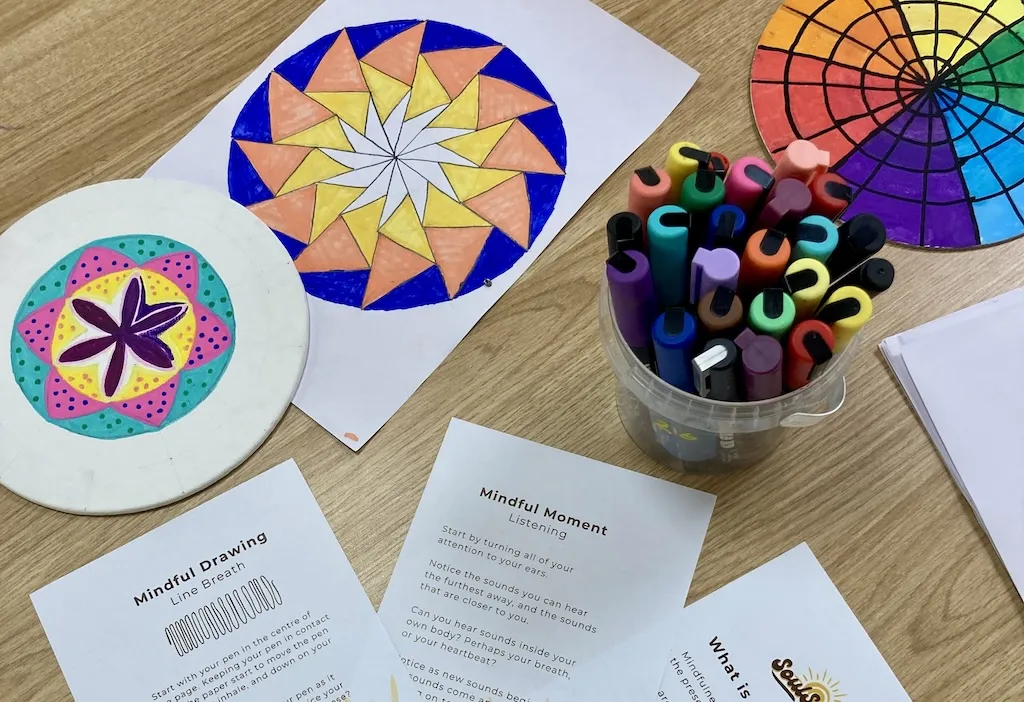
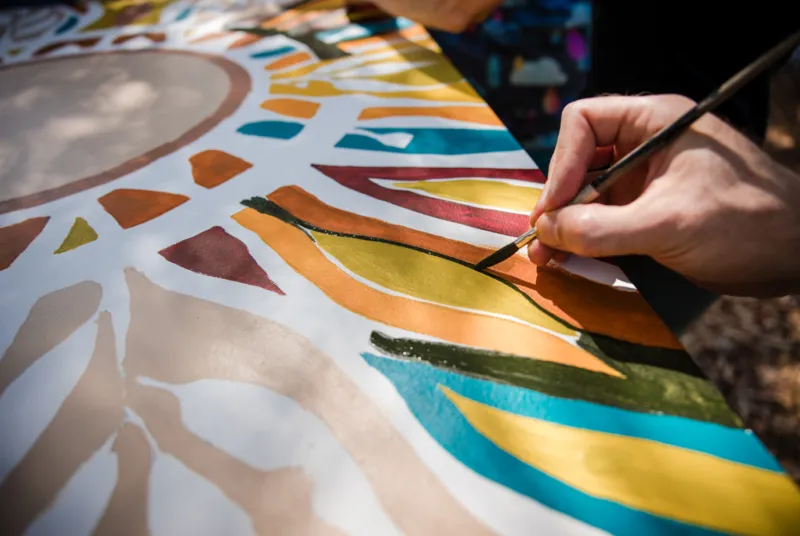
Sometimes we begin our creative sessions with a simple invitation. Just make a mark.
Not a masterpiece. Not a finished drawing. Just one mark. Then another.
There is no expectation for it to become anything. No pressure to get it right. Just an opportunity to create, play and observe our thoughts.
Notice the movement of your hand. Notice the feeling of the pen moving across the page. Notice your breathing. Notice the thoughts that begin to appear.
For many people, it doesn’t take long before the mind starts racing ahead.
“What am I making?”
“This doesn’t look very good.”
“What if I ruin it?”
“What will someone else think if they see it?”
Those thoughts aren’t a distraction from the practice. They are the practice.
Each time we notice our attention has drifted into judgement, comparison or worrying about the outcome, we don’t need to criticise ourselves for it. We simply notice it, and continue with the next mark. The creative process gives our attention somewhere to rest, while mindfulness helps us notice where our attention has gone.
Together, they create repeated opportunities to practice returning to the present moment, with curiosity, kindness and without judgement.
Why It Matters
The more we’ve learned about wellbeing, the clearer it’s become that it isn’t shaped by one thing alone. Our relationships matter. Our sense of purpose matters. Movement matters. Rest matters. Time in nature matters.
And increasingly, research is highlighting the valuable role that creativity can play alongside these other practices in supporting our health and quality of life.
As researcher Daisy Fancourt writes in Art Cure, creativity isn’t a replacement for medicine or other evidence-based approaches to care. Rather, it makes a compelling case for earning its place alongside them.
Perhaps this is because creativity offers us something that can be difficult to find in everyday life. A reason to slow down. A chance to pay attention. An opportunity to explore without needing all the answers. And a place to practice qualities that extend well beyond the creative process itself.
For us, that’s what mindful creativity is really about. It’s a space to cultivate the qualities that help us navigate life with greater presence, patience, self-trust, compassion and connection.
Because in the end, wellbeing isn’t something we achieve. It’s something we practice.